European airlines face wave of false bomb threats
Flights from the UK, Portugal, and Ireland were diverted or escorted to safety in Italy, Poland, and Spain after officials received reports of explosives.
By Andrew Bennett ·
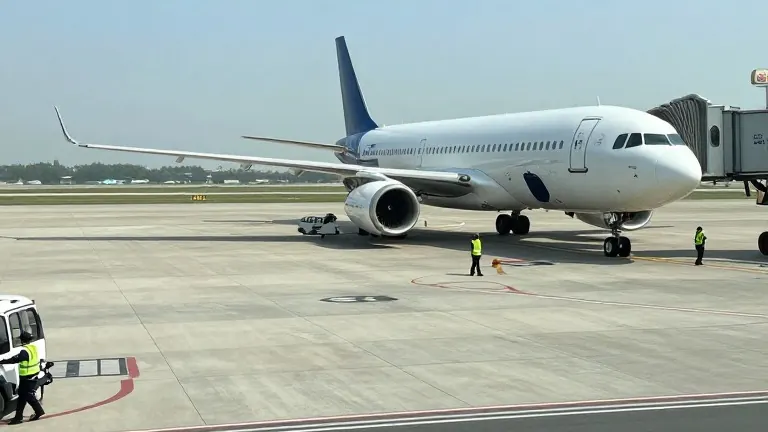
Travelers across Europe faced delays and diversions on Tuesday after multiple airlines reported false bomb threats on their aircraft. The incidents affected flights operated by Ryanair, Wizz Air, Polish airline LOT, and Scandinavian Airlines. Officials confirmed that no explosives were found on any of the planes, and no passengers were injured during the checks.
In Italy, a Ryanair jet arriving from Lisbon landed at Rome Fiumicino Airport after an email claimed a bomb was aboard. A separate Ryanair flight from Dublin also reported a threat to Rome. The Italian Air Force scrambled two Eurofighter jets to escort the Dublin flight to the ground. A Fiumicino official said police bomb disposal experts searched the passengers, crew, and baggage on the Lisbon flight and found nothing. The official spoke on condition of anonymity because they were not authorized to speak publicly.
Poland experienced similar disruptions. A LOT flight from London Heathrow was diverted to Modlin Airport near Warsaw. The airport closed temporarily while the jet was inspected. LOT stated that the search yielded no results and that normal operations had resumed. At Warsaw Chopin Airport, a SAS flight from Copenhagen received a report of a potentially dangerous item. One runway was closed, and passengers disembarked. SAS spokesperson Alexandra Lindgren Kaoukji told the Polish press agency PAP that the plane landed normally and the matter was referred to police.
In Spain, a Ryanair flight from Manchester landed at Murcia Airport after a bomb threat. Francisco Lucas, the Spanish government delegate for the Murcia region, confirmed on social media that the aircraft was inspected and 121 people on board passed security checks. In Bulgaria, authorities checked two aircraft at Sofia International Airport that had received threats while en route. Transportation Minister Georgi Peev said the planes originated in Italy and Ireland. He noted that the pilot of one plane received the threat information from the airline and that air traffic control followed standard protocols for a safe landing.
The Tuesday incidents followed a Monday event involving a Wizz Air flight from Luton Airport near London. That plane was diverted to Budapest after a threat was received in the air. Hungarian Defense Minister Romulusz Ruszin-Szendi said a Gripen fighter jet escorted the Wizz Air flight to Liszt Ferenc International Airport. Wizz Air told state news agency MTI that inspections found no threats aboard. Acting Interior Ministry Secretary General Lyubomir Nikolov said authorities were still trying to identify the sender of that threat.
Matthew Borie, co-founder of Osprey Flight Solutions, suggested several explanations for the series of unexplained incidents. He proposed that a single threat may have triggered copycat actions, or that a specific group is making multiple threats. He also pointed to hybrid warfare by state actors as a possible cause. Borie noted that the focus on Europe suggests a potential Russian angle, while also observing that Iranian hybrid warfare remains active in certain areas. He advised travelers not to be alarmed, citing the existence of coordinated response mechanisms that sometimes include NATO fighter jets.
A separate investigation took place in Greece regarding a cruise ship docked in the Aegean island of Syros. The Panamanian-flagged, Israeli-run vessel Crown Iris received a bomb threat. Coast guard officers used a sniffer dog and a diver for an initial search, which found no suspicious objects. A specialist diving unit was en route for further checks. The ship, scheduled to sail for Haifa with 940 passengers and 597 crew, was being evacuated as a precaution. The vessel has previously faced protests from activists opposing the war in Gaza.