License Plate Cameras: Bipartisan Push for Federal Oversight
Nine distinct legislative proposals now aim to regulate the Flock Safety network, reflecting a rare alignment on surveillance concerns.
By Ethan Cook ·
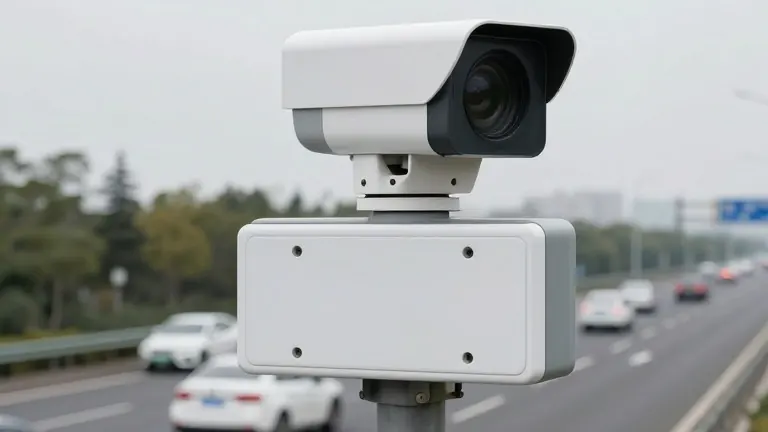
Automated license plate readers have become one of the few technology issues where congressional leaders from opposite ends of the spectrum agree on the need for regulation. This consensus has produced a surge in legislative activity on Capitol Hill, with nine distinct proposals now pending or expected to address the scope of the Flock Safety network.
Rep. Greg Steube, R-Florida, described the alignment as a rare political event. "You have outrage from the far left, and you have outrage from the far right," Steube said, noting that the technology creates a surveillance environment where individuals feel monitored regardless of their location. He filed his own bill, H.R. 10606, known as the FLAFO Act, immediately after an interview, arguing that the nationwide interconnected nature of the camera network requires a federal framework rather than a patchwork of local rules.
Flock Safety operates more than 120,000 cameras across 49 states and has integrated over 6,000 law enforcement agencies into its data-sharing network. This connectivity allows even small departments to query data from cameras located in distant jurisdictions. While the company argues this network improves crime solving rates, critics point to a growing list of officers fired or arrested for using the system for personal or retaliatory searches.
The legislative efforts vary in their specific mechanisms. H.R. 9800, introduced by Rep. Tim Burchett, R-Tennessee, would bar federal agencies from purchasing or operating such systems. H.R. 10221, the Flock-Off Act introduced by Rep. Thomas Massie, R-Kentucky, seeks to cut off federal funding for related contracts and data-sharing arrangements. Rep. Alexandria Ocasio-Cortez, D-New York, introduced H.R. 10691, the Ban Flock Act, which prohibits federal use unless Congress passes a specific authorization law that limits data retention to 48 hours.
Other proposals include H.R. 10822, the ALPR Accountability Act of 2026, introduced by Rep. Pat Harrigan, R-North Carolina, which mandates a warrant for queries and requires record deletion within one day. Senator Josh Hawley, R-Missouri, has also promised legislation that would require mandatory audits and prohibit the incorporation of facial recognition technology. These bills aim to address concerns raised in a September Senate hearing and a year-long investigative report that found some local contracts were made with minimal public discourse.
A federal judge in Oklahoma recently ruled that the warrantless use of such technology violated the Fourth Amendment, describing it as a "large-scale, dragnet-type surveillance system." Flock Safety responded to the legislative push by stating that its technology is an important public safety tool and that it supports "thoughtful, bipartisan legislation" that includes strong privacy and transparency guardrails. The company maintains that local elected officials are primarily responsible for setting boundaries on how the technology is used.
Sen. Ron Wyden, D-Oregon, emphasized that the issue transcends philosophical differences. "We decided early on that this was all about warrantless mass surveillance," Wyden said. He urged communities to make local choices about camera placement while acknowledging the vendor's responsibility. The current legislative momentum is driven by a shared belief that the existing lack of national rules allows for inconsistent practices across different jurisdictions.
More Business · Unethical Practices · Report a business · Got a Story?