Spanish Rail Safety: Two Fatal Collisions Shake Trust Ahead of Vote
A second deadly high-speed rail crash in six months has exposed systemic failures in Spain's liberalized network, complicating Prime Minister Pedro Sánchez's campaign strategy.
By Ethan Cook ·
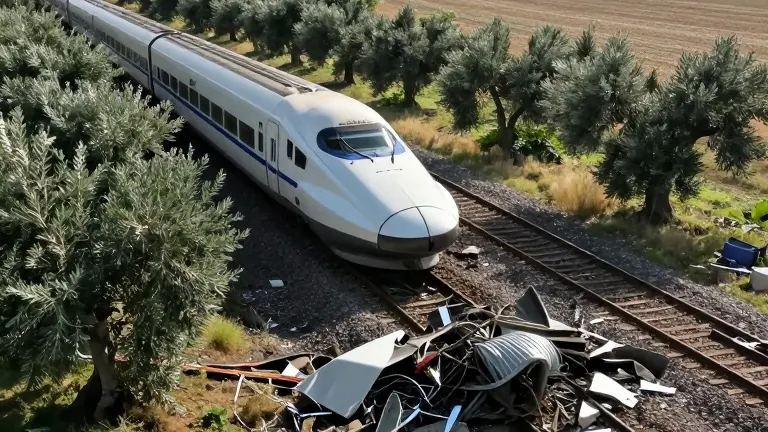
Spain’s rail network, long a source of national pride and the second largest in the world by track mileage, is facing a credibility crisis. On Wednesday, a rear-end collision near Urda in the province of Toledo killed 68 people, marking the second fatal high-speed rail disaster in the country since January. The incident occurred just four weeks before national elections, forcing the government to address questions about the safety of a system that carried 45 million passengers last year.
Prime Minister Pedro Sánchez visited the crash site after regional authorities confirmed the death toll. He pledged a full investigation and immediate safety reinforcements. "It is not acceptable for a country like Spain to endure two high-speed train accidents in the same year," Sánchez said. His administration declared three days of national mourning beginning Thursday. The crash involved a state-owned RENFE train and a private IRYO train, two operators that have shared the network since the sector liberalized in 2021.
Transport Minister Óscar Puente identified human error within the central command structure as the likely cause. A computer malfunction at 8:30 a.m. disabled the security system on a 63-kilometer stretch of track, forcing all trains to stop. Minutes later, controllers instructed the RENFE train to resume movement without speed restrictions despite an active stop signal. The train collided with the stationary IRYO service at 8:53 a.m. Puente stated that the engineers were not at fault and that the train should have been ordered to move at reduced speed.
The timing of the disaster has complicated Sánchez’s political standing. He had called for early elections earlier this month, aiming to capitalize on voter dissatisfaction with housing costs and high rents. However, polls already showed his Socialist Party facing an uphill battle against conservative and far-right challengers. The crash adds a new layer of scrutiny, particularly regarding the management of the newly liberalized rail sector.
Political rivals quickly moved to leverage the tragedy. Alberto Núñez Feijóo, leader of the Popular Party, demanded a rigorous investigation and canceled campaign events to respect the victims. "This is the moment to respect the dead, the injured and their families," Feijóo said. Santiago Abascal, leader of the far-right Vox party, adopted a more aggressive tone, calling the government a "criminal organization" and vowing to pursue legal accountability until the current administration answers for its actions.
Rescue operations involved hundreds of emergency workers, firefighters, police, and soldiers. By late Wednesday, cranes had begun lifting damaged sections of the trains. The previous year’s crash in January killed 46 people when a RENFE train jumped the track and struck an opposing IRYO train in southern Spain. Both incidents involved the same two operators, raising questions about the safety protocols established during the recent transition from a state monopoly to a multi-operator market.