Utah spaceport report favors Delta, Green River
State committee identifies two sites for a facility that could handle both launches and landings, though some experts urge a focus on recovery.
By Andrew Bennett ·
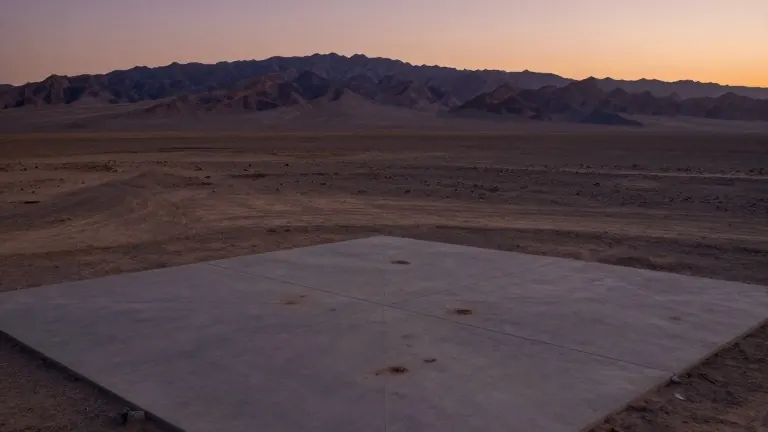
Utah’s Spaceport Exploration Committee has recommended that the state move forward with developing a facility capable of launching and recovering spacecraft. The panel, which spent a year assessing viability, identified two specific locations in southwestern Utah as the top contenders for this multimodal site. The report concludes that both launch and reentry operations are feasible at these sites and meet federal safety requirements.
The committee narrowed its search from seven potential sites to Delta in Millard County and Green River in Emery County. Delta scored highest in market demand and operational factors. It benefits from existing military operating agreements at the Utah Test and Training Range, favorable flight safety analyses, and proximity to major highways and a rail line. The site is also near the Wasatch Front and Salt Lake City International Airport, which the report cites as market advantages.
Green River, located in Emery County, led the evaluation in capital and operating costs. The committee noted its historic launch heritage and a usable restricted corridor for point-to-point testing. Like Delta, Green River has access to an interstate, major highways, and a rail line. The site also features abundant Bureau of Land Management and state lands, which the report identifies as a key asset for expansion.
The 18-member committee, co-chaired by state Sen. Ann Milner and Utah Department of Transportation Commissioner Carlo Braceras, issued four specific recommendations in its final report. Lawmakers are urged to secure site control and begin the Federal Aviation Administration licensing process. The report also recommends authorizing the Utah Department of Transportation to lead ongoing development efforts and reauthorizing the committee to oversee the project.
Despite the committee’s support for a dual-purpose facility, some industry leaders argue Utah should prioritize reentry over launching. Delian Asparouhov, co-founder and president of Varda Space Industries, testified before the committee and later told the Deseret News that Utah’s geography is better suited for landing vehicles returning from orbit. Varda returned its first space manufacturing capsule to Dugway Proving Ground in 2024. Asparouhov noted that securing that landing was difficult, leading the company to use a private range in Australia for subsequent missions.
Asparouhov said he would welcome a return to Utah for its expansive landing areas and history of government spacecraft returns. He sees an opportunity for the state to build infrastructure that supports companies manufacturing products in microgravity. "There is a compelling case for investing in reentry infrastructure," he said. He added that a dependable landing location is a practical business need for firms increasing mission frequency.
A.C. Charania, a former NASA chief technologist, advised state leaders to adopt a phased approach. He suggested starting with reentry to build operational expertise and attract companies before pursuing the more complex infrastructure required for launches. Charania pointed out that an inland launch site raises questions about where separated rocket stages would land, potentially in Arizona, Idaho, Montana, or Canada. "Geography is destiny," Charania said. "In Utah, it’s one of your strongest natural advantages."
Aaron Starks, president of the aerospace advocacy group 47G and a member of the Spaceport Committee, echoed the call for a focus on recovery. Starks said he is more bullish on reentry than launch, viewing launch capacity as a competitive advantage that should not distract from the state’s immediate opportunities. "We’re not going to compete with Kodiak, Vandenberg or Florida," Starks said. He emphasized that the committee remains open to evaluating different models as development proceeds.
More Business · Unethical Practices · Report a business · Got a Story?