2.8 percent: The share of eurozone wealth held by households under 35
New ECB data reveals a stark generational gap as student protests spread across eleven European nations over rising living costs.
By Rosa Wojcik ·
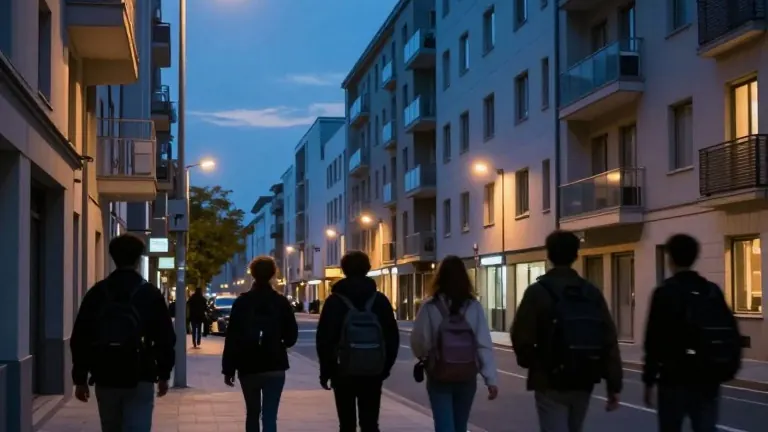
Student protests that began in France last September have now spread to more than eleven European countries.
Demonstrators cite soaring rents, high fuel prices, and cuts to public services as primary drivers of the movement. Many young participants report a growing sense of financial disillusionment, stating they no longer expect to be better off than their parents.
Data from the European Central Bank’s 2023 Household Finance and Consumption Survey illustrates the scale of this divide. Households led by individuals under 35 hold a median net wealth of approximately 25,000 euros. In contrast, households headed by those aged 55 to 64 possess a median net wealth of about 208,000 euros. This represents a disparity of more than eight times between the two age groups.
The survey covers the eurozone along with the Czech Republic and Hungary. It measures net wealth by calculating property, vehicles, valuables, and savings minus debts. Across the 22 countries surveyed, under-35s hold only 2.8 percent of total household wealth. The 55-to-64 age group commands the largest share at 24 percent.
Regional differences are pronounced. Finland exhibits the most extreme inequality, with under-35s holding just 0.8 percent of household wealth. In that country, individuals over 55 hold more than 71 percent of the total. Young people also hold small shares in Ireland, Austria, Greece, and Germany, where percentages range from 1.4 to 2 percent.
In Central and Eastern Europe, wealth is distributed more evenly. Lithuania shows under-35s holding 13.2 percent of household wealth, compared to 15.9 percent for the 55-to-64 group. Croatia, Slovakia, and Estonia follow similar patterns, with younger adults holding between 9.8 and 12.3 percent of total wealth. Malta stands out as an exception outside these regions, with under-35s holding 11.1 percent.
Evelyn Astor of the European Social Observatory notes that housing prices have risen sharply in both rental and ownership markets. She explains that this trend reinforces feelings of inequality, as ordinary families struggle to pay rent while wealthy individuals use their capital to make large investments in the European housing market.
Costs for everyday goods and services have also increased substantially. Prices for food, energy, transport, and household bills have risen by 67.2 percent in the eurozone, Hungary, and the Czech Republic since the year 2000. Hungary has experienced the steepest increase, with prices more than tripling according to Eurostat. Eastern European countries have seen the sharpest hikes, particularly since 2022, due to their reliance on Russian energy supplies during the full-scale invasion of Ukraine.
Annual inflation in the EU reached 9.2 percent in 2022, driven mainly by energy costs. Although inflation has eased since then, the price rises from the pandemic and the war have not reversed. Households continue to face higher costs for basic necessities, creating economic pressure that fuels the current wave of unrest.
More Business · World news · Unethical Practices · Report a business · Got a Story?