Breaking: Data Center Moratoriums Drive AI Sell-Off
Democratic victories and ballot measures targeting AI infrastructure triggered a historic crash in tech stocks.
By Rosa Wojcik ·
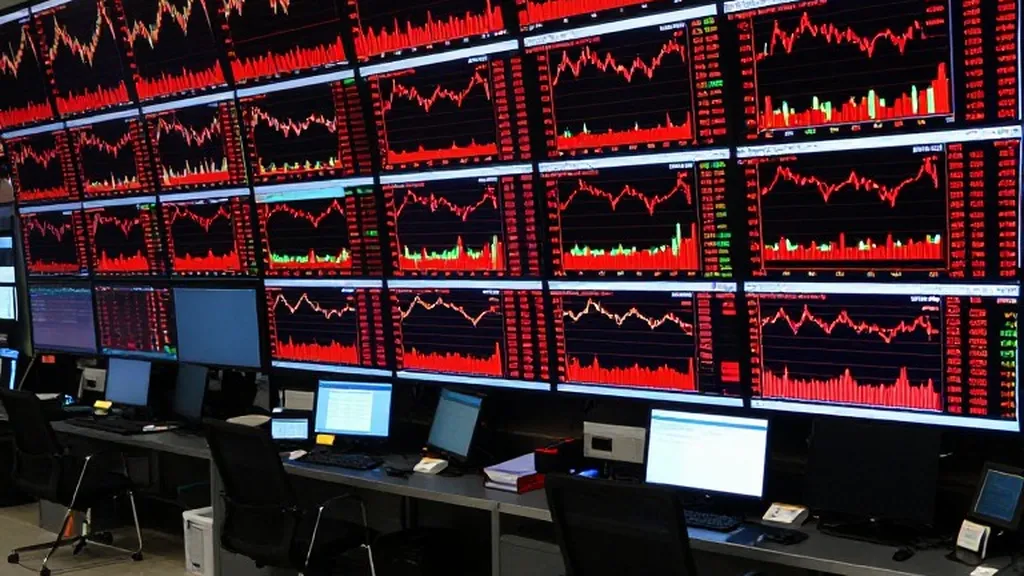
The S&P 500 fell 4.3 percent on Thursday, marking its worst day since April 2025, while the Nasdaq Composite dropped 5.5 percent to close more than 11 percent below its recent record. The Dow Jones Industrial Average lost more than 1,800 points, a decline of 3.4 percent, erasing the gains made the previous day. The selling spread through every sector of the S&P 500 and gathered pace as the trading session progressed. The Nasdaq entered correction territory, a defined state where the index falls at least 10 percent from its recent high. An estimated $2.5 trillion in market value was wiped from the Nasdaq Composite, a figure that reflects the scale of the retreat from high-flying technology assets.
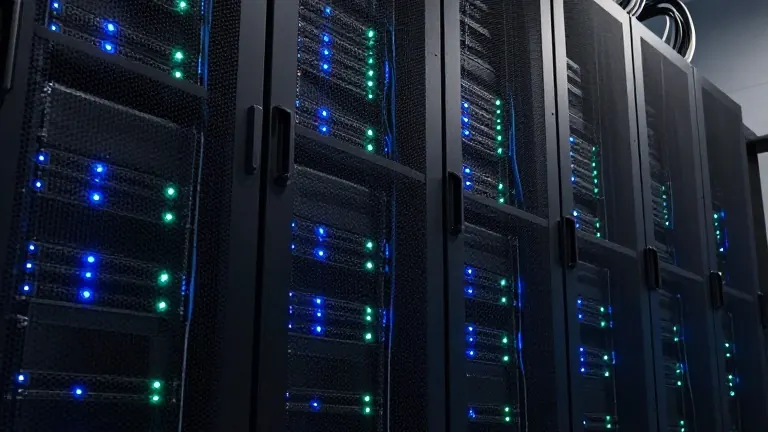
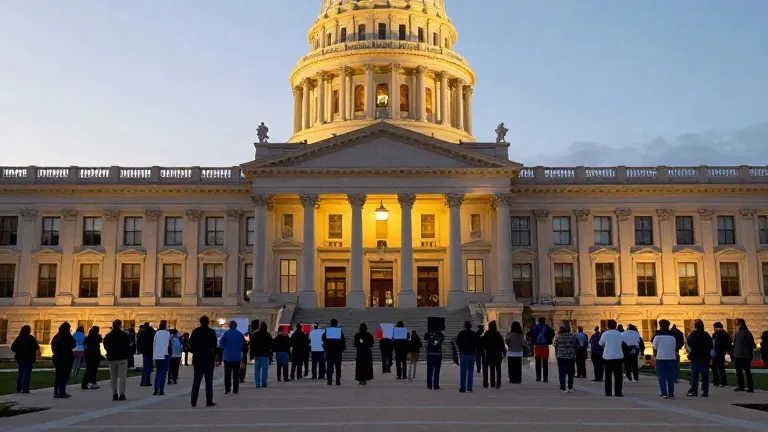
The primary catalyst for the rout was the Democratic sweep of the House and Senate in the midterm elections held on Tuesday. The election results shifted the balance of power in Washington, creating immediate uncertainty for the technology sector. Democrats campaigned across the country on platforms that emphasized slowing the spread of data centers and artificial intelligence. Voters also rejected data center development in a series of local ballots, with dozens of measures on ballots around the country aimed at restricting such projects. This political shift signaled a potential slowdown in the physical infrastructure required to support the AI build-out, a concern that had been building among investors for weeks.
In Texas, Democrat Gina Hinojosa won the race for governor after campaigning on an immediate moratorium on new data center construction. Democratic victories in states with large concentrations of planned data centers, including Ohio and Texas, heightened concerns that these facilities would face new regulatory hurdles. The market reacted sharply to the prospect of state-level restrictions, with chip and AI stocks leading the decline. Nvidia fell 9.2 percent, the biggest faller in the Dow, losing more than $400 billion in market value. The Philadelphia Semiconductor Index, which tracks 30 of the largest chip companies, fell more than 12 percent.
The selling pressure extended beyond individual companies to broader market sentiment. The Cboe Volatility Index, known as Wall Street's fear gauge, jumped as much as 5.7 points to above 28, its highest reading since March 31, 2026. Nearly 800,000 VIX call options had traded by midday, a volume 3.5 times the 30-day average. This surge in volatility indicated that traders were aggressively hedging against further declines. The 10-year Treasury yield fell to 4.83 percent, its lowest since September, as investors moved their capital into bonds as a safe haven during the equity sell-off.
Analysts suggested that the market was re-evaluating the valuation of artificial intelligence stocks. Susannah Streeter, chief investment strategist at Wealth Club, stated that fresh panic over the AI trade had hit Wall Street hard. She noted that fears regarding the returns on vast sums poured into AI infrastructure were colliding with the prospect of a sharp slowdown in data center construction. Ted Parkhill, founder and chief executive of Incline Investment Management, added that the market was moving from the promise of AI to the price of AI. He warned that while AI would be transformative in the long run, not every AI-related stock was currently priced appropriately, leading to significant turmoil.
Neil Wilson, an investor strategist at Saxo UK, described the event as a complete capitulation-level event in tech stocks. Wilson said that the fear was a total momentum unwind as Democrats paced the frontier and potentially halted data center buildout. He observed that while the move looked overdone, the nature of selling in this market required looking for stability first. Dan Ives, a tech analyst, agreed that there was no way to sugarcoat the impact of Democrats taking control, especially over the Senate. Ives stated that the midterm results were a clear sign that the pace of data center build-out would start to slow, creating major hurdles for AI and tech legislation in Washington over the next two years.
The reaction from the tech industry itself has been one of surprise and adaptation. Greg Brockman, president and co-founder of OpenAI, spoke at the WSJ Tech conference in Napa, California, on Wednesday evening. He acknowledged that everyone had been surprised by the reaction to data centers and that more work was needed to bring communities on board. Brockman noted that from San Francisco, trying to build infrastructure in Texas or Georgia, companies could no longer just tweet that the project was good. He emphasized the need to be present in those communities to build support. Dina Powell McCormick, president of Meta, told the same conference that the industry needed to double and triple down on telling the story of AI.
Historical context provides some perspective on the current volatility. Frank Cappelleri, founder of CappThesis, pointed out that the Nasdaq was higher 12 months after the election in all but one of 13 midterm cycles since 1974. However, he cautioned that the path can be a volatile one. A review of 10 Nasdaq corrections over the last decade showed that sell-offs in 2025, 2022, 2020, and 2018 were followed by further rough selling over the next month. Yet, the Nasdaq was back in rally mode six months later in every case except 2022. Gene Goldman, chief investment officer at Cetera Financial Group, predicted a recovery, stating that corrections in a bull market are typically short-lived. He noted that while the market was ugly right now, he believed a bounce back would occur soon.
More Business · Unethical Practices · Report a business · Got a Story?