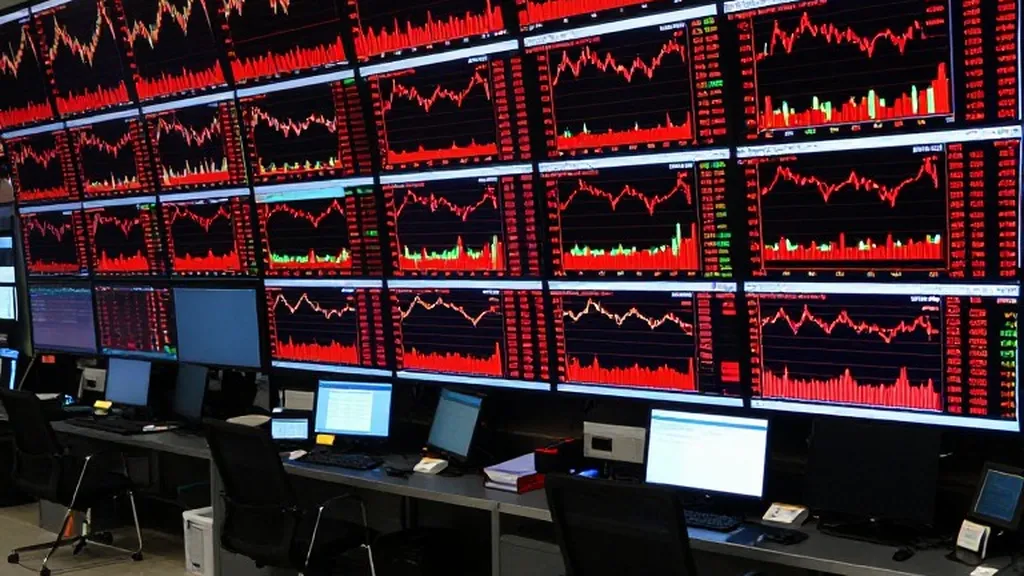
European stocks slide on US tech selloff
Asian markets posted deep losses Friday as fears of an AI spending slowdown spread from Wall Street to global equity indexes.
By Andrew Bennett ·
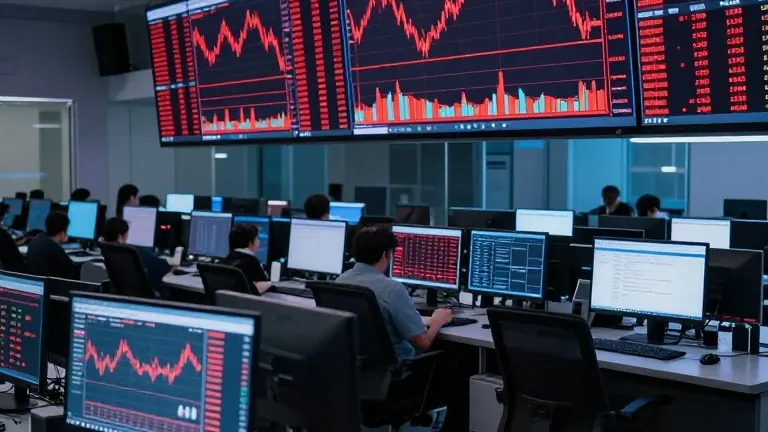
European equity markets opened lower on Friday, extending a global sell-off triggered by sharp losses in United States technology stocks. The decline followed a volatile session in Asian markets where major benchmarks posted some of their steepest drops in years. Investors are reassessing exposure to the artificial intelligence sector after a political shift in Washington raised questions about future infrastructure spending.
The turmoil began on Thursday in New York, where the Nasdaq share index fell 5.5 percent. That represented the steepest decline for the index in 19 months. The negative momentum carried over to Friday morning in Asia, where Japan’s Nikkei 225 index sank 6 percent. South Korea’s Kospi index dropped more than 8 percent during early trading hours.
In London, the FTSE 100 index opened 1.5 percent lower, or 166 points down, at 10,615. AstraZeneca was the largest loser on the board, with shares opening 2.8 percent lower. International Air Group, the parent company of British Airways and Iberia, fell 1.5 percent after reporting that it missed profit forecasts in a recent trading update. Mining firms Antofagasta and Anglo American also saw their shares decline.
The retreat from risk assets was not confined to the United Kingdom. Germany’s Dax index opened 1.5 percent lower. France’s Cac 40 dropped 1.2 percent, while Spain’s Ibex index lost 1.1 percent of its value. These moves reflect a broad-based withdrawal from volatile sectors as portfolios are rebalanced.
Susannah Streeter, chief investment strategist at Wealth Club, stated that the tech sell-off has intensified, with pain from Wall Street carried straight through to Asia and knocking sentiment in Europe. She noted that major concerns are colliding, specifically the potential slowdown in datacenter construction. This threat disrupts the spending spree that has underpinned the current market boom at a time when investors are nervous about returns on massive investments.
Chip manufacturers led the recent slump in the US market. SanDisk, a memory maker, saw its shares tumble 22 percent. Western Digital, a hard drive manufacturer, fell 17 percent. Volatility spiked as the Vix index, often called Wall Street’s fear index, jumped 61 percent. This pushed volatility levels to their highest point since the early weeks of the Iran war.
Despite the sharp weekly losses, most major indices remain in positive territory for the year. The Nasdaq Composite is still up 4.6 percent since the start of January, although it is currently more than 10 percent below its recent peak. The FTSE 100 has gained almost 6.9 percent in 2026 to date. However, the index is now more than 300 points below the record high it set in July.
The Democratic victory in the recent midterm elections has introduced new variables into the investment equation. Analysts are questioning how AI infrastructure and regulation may evolve under the new political dynamic. Traders are adopting a cautious approach, leading to the widespread declines seen across Europe and Asia. Market participants are monitoring developments to determine if the current volatility persists, focusing on how tech companies respond to shifting conditions.
More Business · World news · Unethical Practices · Report a business · Got a Story?