Israelis vote to determine Netanyahu's fate amid war and coalition uncertainty
Over 7 million Israelis cast ballots Tuesday in a tight race between Prime Minister Benjamin Netanyahu and former military chief Gadi Eisenkot, with early turnout hitting a 45-year high.
By Andrew Bennett ·
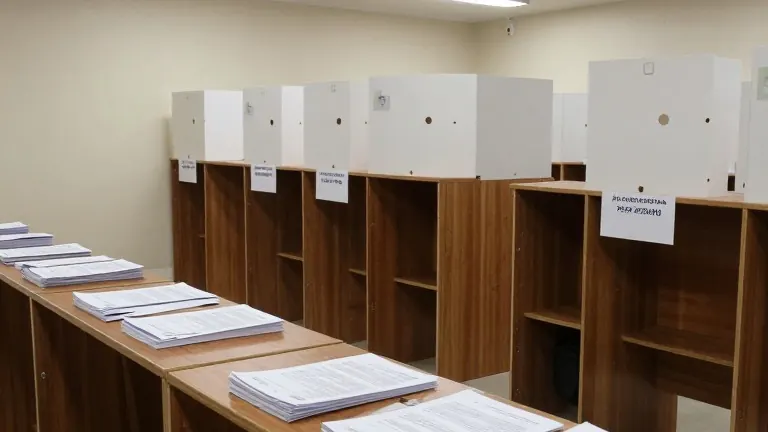
Prime Minister Benjamin Netanyahu faces a decisive test Tuesday as Israelis vote in an election defined by three years of war and deep political division. The contest pits Netanyahu, the country's longest-serving leader, against Gadi Eisenkot, a former military chief who leads the main opposition bloc. Opinion polls indicate a narrow margin between the two camps, leaving the final outcome dependent on post-election coalition negotiations.
Voter engagement has been strong since polls opened. Initial data from the Central Elections Committee shows that nearly 17% of eligible voters cast ballots in the first three hours. This marks the highest early turnout recorded since 1981. Tens of thousands of Israelis living abroad traveled home to participate, and approximately 330,000 young citizens are voting for the first time while facing compulsory military service.
The race centers on security leadership and the ideological direction of the state. Netanyahu's base views him as a steady hand who has guided Israel through multiple conflicts while protecting its Jewish identity. Critics argue he prolonged the Gaza war for political gain and weakened democratic institutions. Eisenkot's supporters point to his security record and the personal loss of his son and two nephews in the conflict. They promise to improve Israel's international standing, conscript ultra-Orthodox men, and strengthen the judiciary.
Coalition arithmetic remains the critical variable. No single party has ever won a majority in Israel's Knesset, forcing leaders to form alliances. Both major blocs may lack sufficient seats to rule alone, potentially triggering weeks of negotiations. Arab-led parties, particularly Mansour Abbas's Ra'am party, could act as kingmakers. Abbas stated during his vote that their participation would change the government, hoping for over 70% turnout in Arab communities. Far-right minister Itamar Ben-Gvir warned that Abbas's party would control the government if Netanyahu's allies failed to win.
Tensions with Iran hang over the vote. Netanyahu visited a missile-defense battery this week, warning Tehran of a devastating blow if it attacked. In the north, emotions ran high. In Kiryat Shmona, a Netanyahu stronghold, one voter tore down a poster of Eisenkot. In Tel Aviv, families of victims from the October 7, 2023 attack held a moment of silence. Yona Adam, whose daughter Mapal Adam was killed, urged voters to remember those whose voices are no more.
Eisenkot's Yashar party filed an urgent complaint regarding nine incidents where ballot slips were missing or damaged. The party suggested the issues were a deliberate attempt at sabotage. However, acting director-general Dean Livne of the elections committee said the number of irregularity reports was much lower than in previous elections.