Hebron under Israeli siege as 3,000 residents displaced
Seven days into the closure, Israeli forces and settlers have detained over 110 people and uprooted hundreds of olive trees in the West Bank city.
By Rosa Wojcik ·
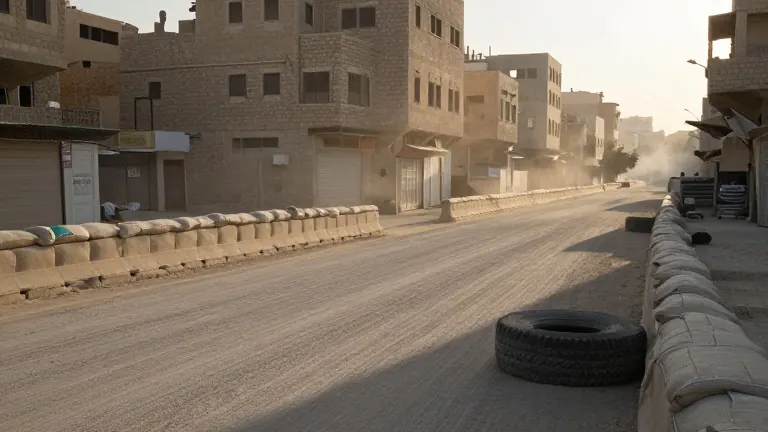
Israeli forces have maintained a military lockdown of Hebron for seven consecutive days, sealing off the West Bank's largest city and restricting movement.
The siege began last Friday following the killing of two Israeli soldiers at a checkpoint near the settlement of Telem. Prime Minister Benjamin Netanyahu ordered the closure on social media, stating his forces would "destroy this place" to change it completely. He also signaled preparation for a wider lockdown across Judea and Samaria.
More than 3,000 Palestinians have left the city since the raids started. Israeli troops converted several homes into military posts and barracks, displacing residents in the process. In the Ein Deir Bahha neighborhood, soldiers forced dozens of families to flee at night without their belongings. A 70-year-old shopkeeper named Hijazi Shawer was beaten by soldiers during the operation.
Settlers have intensified attacks on Palestinian communities and agricultural land. In the Ras al-Joura area, settlers assaulted Palestinians and damaged vehicles on Thursday. In Masafer Yatta, to the south, 12 villages were isolated, cutting farmers off from markets. Settlers uprooted more than 200 fruit trees and destroyed water wells east of the city. Wafa reported that farmers were prevented from harvesting olives, a major crop in the region.
Detentions have risen sharply during the one-week period. The Palestinian Prisoner’s Society reported at least 110 arrests in Hebron governorate, including three women and seven children. On Wednesday, three foreign journalists were assaulted by settlers. Andrey Ilyich Khrzhanovskiy, known as Andrey X, lost consciousness and was detained at a police station without immediate medical care.
International observers and rights groups have criticized the operation as collective punishment. UN Human Rights Chief Volker Turk warned that threats to empty neighborhoods raise concerns of ethnic cleansing. The Israeli NGO B'Tselem stated the military action has nothing to do with security. Roland Friedrich of UNRWA noted the displacement echoes the forced removal of 34,000 refugees from northern West Bank camps in early 2025.
Palestinian officials accuse the Israeli government of using the operation to secure votes from settlers ahead of Tuesday's elections. Hebron produces roughly 40 percent of Palestinian industrial output and 30 percent of exports, making the economic disruption severe for the territory.
Footage of tear gas fired at Al-Ahli Hospital showed panic among patients and staff. The hospital is protected under international humanitarian law. Israeli forces have continued raids and checks in the city as the seventh day of the siege concludes.