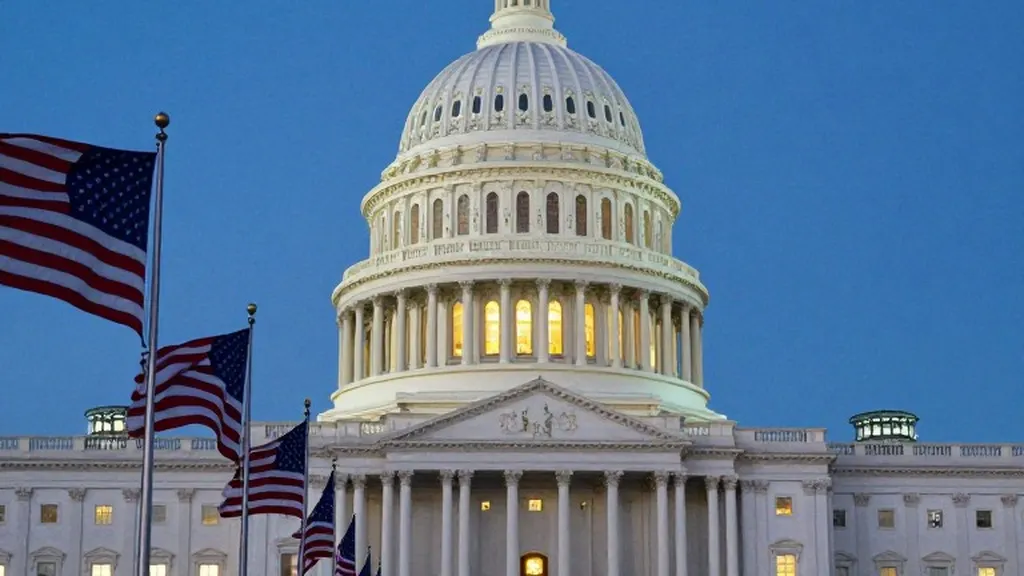
Midterm Reality: Democrats Reclaim Congress as History Repeats Itself
Democrats gained at least 43 House seats and seven Senate seats, cementing a historic wave against the president's party.
By Ethan Cook ·

Midterm elections have long carried a predictable rhythm in American politics, a pattern where the party of the sitting president typically faces significant losses in Congress. In the 2026 election cycle, that historical trend played out with particular force. Democrats secured majorities in both the U.S. House and the Senate, reclaiming control of the legislative branch after a period of divided or Republican-led governance. The results, compiled by Ballotpedia as of 4:00 PM ET on November 6, 2026, show a clear shift in power that aligns with the broader historical data on midterm seat changes. The party in power, in this case the Republicans, lost ground across multiple levels of government, confirming the cyclical nature of voter behavior in off-year elections.
The scale of the Democratic gain was substantial enough to be classified as a wave election in the Senate, according to Ballotpedia. The party picked up at least seven Senate seats, all of which were previously held by Republicans. This net loss placed the 2026 results in the top 20% of election years in terms of seat swings against a president’s party. While the U.S. House results did not quite reach the specific threshold for a wave election as defined by the same source, the magnitude of the change was still significant. Democrats gained at least 43 House seats, with 42 of those previously held by Republicans and one by an independent. The final tally as of the reporting time gave Democrats at least a 250-157 majority in the House and a 54-44 majority in the Senate.
President Donald Trump addressed the outcome in his first major interview since the election, acknowledging the losses and suggesting that his administration’s aggressive deportation policy may have contributed to the results. Speaking on CBS's '60 Minutes,' Trump stated that the policy might have been 'too tough' for midterm voters. He expressed a belief that he could work with the new Democratic majority to reach an agreement on immigration. 'The deal would be we would work something out,' Trump said. 'I think it's something that's actually doable.' This statement marked a notable moment of concession from the president, who has historically maintained a firm stance on immigration enforcement.
Reaction from the new leadership in the Senate was swift and pointed. Senate Democratic Leader Chuck Schumer commented on the interview on social media, noting the irony of the administration’s response to the election results. Schumer scoffed, saying, 'Trump says his immigration crackdown went too far.' He continued, 'Apparently, his solution was to put the man responsible for it in charge of the White House. That's not a course correction. That's a promotion.' This critique referred to Trump’s decision to name Stephen Miller, the architect of the administration's hardline immigration policies, as his new chief of staff, replacing Susie Wiles. The appointment signaled that the administration intended to continue its primary domestic agenda despite the shift in congressional power.
The election also produced a series of historic firsts for Native American women in both tribal and federal politics. Crystalyne Curley was elected the first woman president of the Navajo Nation, a milestone that she described as a win for all Navajo women. Curley narrowly defeated attorney Justin Jones, according to unofficial results. Her victory followed a childhood experience where a field trip to the Navajo Nation Council sparked her political ambition. 'I thought to myself at a very young age, that's where I want to be,' Curley said. She noted that as women, they have to work twice or triple as hard, especially within Navajo politics, and expects to be held to a higher standard in her new role.
Other Native American women also achieved historic victories during this election cycle. Peggy Flanagan became the first Native American woman elected to the U.S. Senate, while Deb Haaland became the first to win a state governorship. These wins represent a turning point for Native American women, whose leadership in their communities has historically not always translated to formal political power. Jordan James Harvill, a Cherokee Nation citizen and strategist with the advocacy group Advance Native Political Leadership, described the results as a seismic shift in their communities. He noted that decades of political organizing are now bearing fruit as more Native women run for and win office, challenging traditional barriers to entry in leadership positions.
The broader implications of the election extend beyond federal offices to state-level control. Democrats won a plurality of state government trifectas and a majority of governorships for the first time since before the 2010 elections. As of the reporting time, Democrats had won 22 of the 36 gubernatorial races, while Republicans won 12. Two races remained uncalled. In terms of state legislative chambers, Democrats captured 46 of the 88 chambers on the ballot, compared to 39 for Republicans. Twelve state legislative chambers changed party control, all shifting to Democratic hands. This widespread gain in state power provides the new congressional majority with a stronger foundation for implementing their legislative agenda across the country.
The election results also highlighted the changing dynamics in other executive offices. Democrats won 21 of the 34 attorney general races, while Republicans won 10. Three offices changed party control, all shifting to Democrats. In the race for secretary of state, Democrats won 21 of the 33 races, compared to 11 for Republicans. Six offices changed party control, all to Democrats. These gains in key state offices further solidify the Democratic footprint in state governments, allowing the party to influence election administration and legal enforcement at the state level. The consistency of these results across different office types underscores the breadth of the Democratic victory in this midterm cycle.