Oleshky Evacuation Corridor Opens With 25-Bus Convoy
A US-brokered ceasefire allows 750 residents to leave the Russian-occupied town by 14:00 local time on October 30.
By Andrew Bennett ·
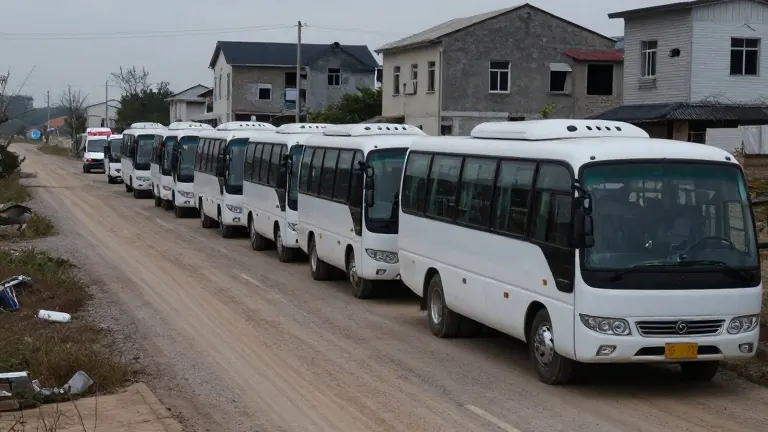
Ukrainian and Russian authorities confirmed on October 30 that the evacuation of Oleshky, a city under Russian occupation in Ukraine's Kherson region, is underway. The operation is facilitated by a ceasefire brokered by US First Lady Melania Trump, which has been in effect across the frontline since Tuesday. This truce allowed crews to clear mines from the main road leading out of the town.
The evacuation window is strictly limited to four hours. A convoy of 25 buses and several ambulances is transporting up to 750 residents toward the Russian border. The route requires evacuees to travel through Russian-occupied territory to the southern city of Anapa. From there, they will fly to Gomel, Belarus, on a government plane before driving into Ukraine's Chernihiv region. Ukrainian territory lies just 5km from Oleshky, but the current route bypasses the front line to ensure safety under the ceasefire terms.
Ukraine's human rights ombudsman, Dmytro Lubinets, stated that all residents wishing to leave would be given a safe opportunity to do so. He added that those choosing to remain would receive necessary humanitarian assistance. Lubinets traveled to Oleshky on Friday alongside his Russian counterpart, Yana Lantratova. In a video posted by Lantratova, officials organized locals into two groups based on whether they intended to move to Russian-controlled areas or Ukraine.
Several hundred residents have opted to stay in the town despite widespread damage and the absence of gas, electricity, and running water. Lubinets noted in a video from his social media account that many people were staying by their own choice. He confirmed that authorities would do everything possible to ensure humanitarian aid reached those remaining. Russia announced on Thursday that it had prepared dozens of tonnes of supplies for these residents, including food, medicine, hygiene products, and fuel for generators.
The decision to stay often involves personal considerations beyond infrastructure. One resident told the BBC she was staying because evacuees were not allowed to bring animals. Olena, a resident of Kyiv, said her grandmother and extended family in Oleshky were also remaining. She explained that the older generation preferred not to move, though she persuaded her father to leave due to the birth of his new grandchild. Her family has experienced severe hardship; her grandmother's sister died last winter after losing her legs to a landmine buried in snow.
Local residents have described using garden wheelbarrows to transport the wounded and dead to the hospital and morgue in the absence of proper vehicles. Olena recounted that this method has become common for moving casualties. The ceasefire in the Kherson region is scheduled to last until the end of Sunday, November 1. This represents the first period of relative peace in the area since Russia's full-scale invasion began in February 2022.