Tesla’s Humanoid Ambitions Hinge on a 'Robot Academy' Rather Than Fleet Data
Lacking the massive data network of its vehicles, Tesla is building a specialized facility where thousands of Optimus units will train one another to achieve production viability.
By Isabella Morales ·
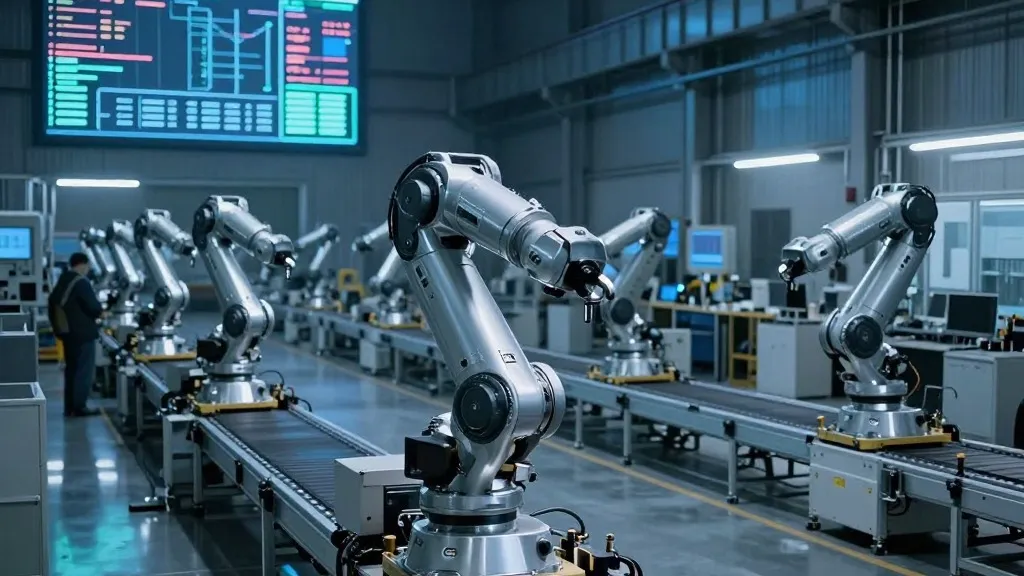
Tesla has officially begun producing its Optimus humanoid robot on a high-volume assembly line within its Fremont factory, marking a distinct shift in the company’s manufacturing focus. In its third-quarter shareholder letter, the automaker asserted that the units rolling off this specific line are the first to meet the standards of a genuine commercial product. The company claims this milestone validates that the current manufacturing process is robust enough for a device intended for widespread market deployment, a significant departure from previous prototype iterations.
The physical transformation of the Fremont facility has been rapid. The space currently dedicated to robot assembly was repurposed from the Model S and Model X production line, a transition completed in just 46 days earlier this year. According to Elon Musk, the infrastructure required to support a theoretical annual capacity of one million units is largely already in place. He indicated on a recent earnings call that output is projected to climb toward approximately 20,000 robots per week as the line reaches full operational speed, though he described the initial growth phase as a shallow slope on a classic S-curve.
A critical question remains regarding how Tesla will teach these machines to function effectively in the real world. Unlike Tesla’s vehicle fleet, which generates vast amounts of driving data from millions of active cars, the Optimus program lacks a comparable data network. To solve this, the company is establishing an 'Optimus Academy.' This facility will house between 10,000 and 20,000 robots that will practice diverse tasks, feeding their performance data back into the AI model to improve subsequent versions. Essentially, every unit produced becomes a data point for the next generation.
Hardware upgrades are also scheduled to coincide with this software development. Tesla plans to integrate its AI5 chip into the robots by the end of next year, a timeline that aligns with the completion of refinements in electromechanical design and reliability. Musk expects to release new video demonstrations within one or two months, showing the robots completing tasks through AI-driven logic rather than preprogrammed motions, a move intended to distance the product from rival demonstrations that rely on scripted routines.
The supply chain is beginning to solidify around this initiative. In September, Tesla certified Tuopu, Joyson, and Sanhua as mass-production partners for key components. Meanwhile, a much larger dedicated facility is under construction at Giga Texas, with drone footage indicating the steel frame is nearing completion. That plant is designed with a long-term target of ten million robots annually. Executives have noted that Optimus production costs are trending similarly to those of the Cybercab, suggesting the robot is being engineered for high-volume economics from the outset, despite the hands remaining the most challenging design element to finalize.
Source: Teslarati