Ethiopian Air Force Gains 12 Su-35 Jets as Moscow Deepens Regional Ties
Addis Ababa took delivery of Russian fighter aircraft and ordered S-400 defense systems, a move that expands military capabilities while intensifying geopolitical competition in the Horn of Africa.
By Rosa Wojcik ·
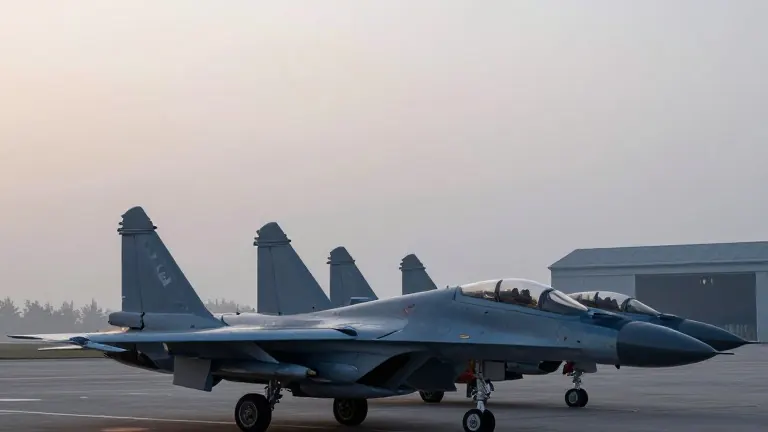
Ethiopian pilots now have immediate access to 12 new Su-35 fighter jets, a delivery that Prime Minister Abiy Ahmed confirmed in Moscow during the Russia-Africa Summit. The aircraft arrive a year ahead of the original schedule, according to Ahmed, and join an air force already equipped with Russian models. This immediate upgrade alters the balance of aerial power in the region, providing Addis Ababa with newer platforms to project force and defend its airspace.
The delivery is the first component of a larger agreement that includes four S-400 air defense batteries. Although no specific arrival date has been set for the S-400 systems, analysts note they will complement the existing fleet by countering conventional air threats. Benedict Manzin, a lead analyst at Sibylline, stated that these defenses are best deployed against fixed-wing aircraft and drones from neighbors like Eritrea. However, he warned that such systems can be overwhelmed by small, inexpensive drones, a vulnerability clearly demonstrated in Ukraine.
For Moscow, the deal reinforces a relationship that stretches back to the Cold War. Putin said in a statement that he values the friendly relations between the two nations and emphasized their joint stance in international affairs. The partnership is also commercially driven, with Putin noting that bilateral trade exceeded $1.3 billion from January to September, more than double the total for all of 2025. Manzin observed that arms sales are a primary export for Russia to Africa, generating revenue while creating dependencies for maintenance and training.
The timing of the delivery coincides with renewed instability in Ethiopia. Fighting between federal forces and Tigrayan units intensified in late September, effectively ending the Pretoria peace agreement signed in November 2022. Government troops entered Mekelle, the Tigray capital, in early October after Tigray People’s Liberation Front fighters withdrew. A six-month caretaker administration has been installed, but rebel leaders have vowed to continue fighting. Manzin cautioned that while the timing aligns with the conflict, the purchases were likely negotiated earlier, noting that air forces are heavily used in any suppression campaign.
Ethiopia is not abandoning other partners. The country maintains a substantial presence of Chinese investment and continuing Western engagement. According to the Stockholm International Peace Research Institute, Russia supplied 15 percent of African imports of major weapons between 2021 and 2025, placing it behind the United States at 19 percent and China at 17 percent. Manzin suggested that Ethiopian leaders are using this competition to maximize their gains by securing support from multiple global powers.
Abiy and Putin discussed additional areas for cooperation, including nuclear energy, health, and trade. Putin identified energy, agriculture, industry, and education as potential sectors for further engagement. The summit concluded with both leaders reaffirming their commitment to multilateral cooperation, leaving the framework for future economic and military interactions in place.