Iranian Leaders React to US Election Loss as Houthi Strikes Target Saudi Arabia
Tehran officials cite the midterms as a rejection of war, while Yemeni rebels claim attacks on Riyadh and a deadly strike hits Taiz.
By Andrew Bennett ·
U.S. voters gave Democrats control of Congress in Tuesday's midterm elections, a result that has shifted the diplomatic posture between Washington and Tehran. Iranian officials cited the outcome on Wednesday as evidence that Americans rejected President Donald Trump's military campaign against Iran.
The shift in power offers immediate leverage to negotiators in Tehran. Mohammad Bagher Qalibaf, Iran's chief negotiator and parliament speaker, posted on X that Americans said no to war. He endorsed this message and warned that if the U.S. government ignores the vote for change, the country would learn that Iran's no comes with a nightmare. The election result complicates the ongoing talks aimed at preventing renewed full-scale fighting between the two nations.
Not all Iranian leaders agree on how to interpret the U.S. vote. Ayatollah Mojtaba Khamenei, the supreme leader, dismissed the idea that the election would change Washington's approach to the Islamic Republic. His stance contrasts with the more optimistic tone from Qalibaf, who sees the change in Congress as a potential opening for de-escalation.
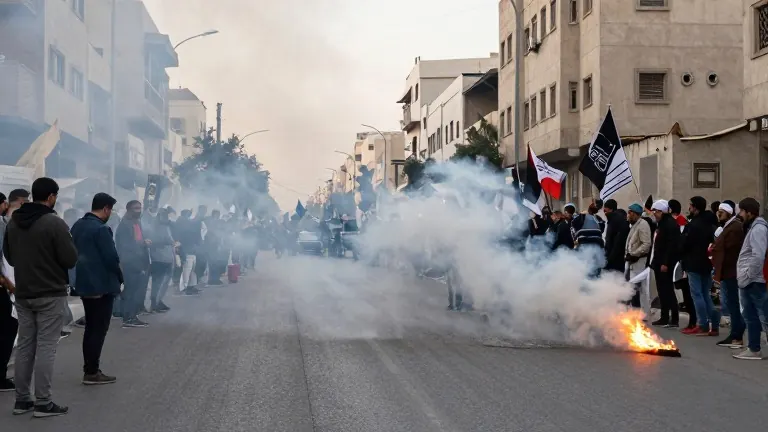
On the ground in Tehran, the mood remained tense. Thousands marched through the capital on Wednesday for a government-organized demonstration. The event commemorated the anniversary of the 1979 takeover of the U.S. Embassy. Pro-government demonstrators burned American and Israeli flags and chanted slogans including death to America and death to Israel.
In Yemen, the Iran-backed Houthi rebels claimed they struck targets in Saudi Arabia on Wednesday. Their military spokesperson, Yahya Saree, said the group fired a ballistic missile at King Khalid International Airport in Riyadh. He described the damage as major but did not provide visual evidence. Saree also claimed that a drone hit a radar installation and a ballistic missile hit a command and control center in Jazan province.
Saudi authorities issued alerts overnight in Riyadh and in the southern regions of Jazan and Najran. The civil defense warned of potential danger in those areas. The Associated Press could not independently verify the Houthi claims, and the Saudi information ministry did not immediately respond to requests for comment. The Houthis have targeted oil, logistics, and airport infrastructure in Saudi Arabia for months, describing their attacks as a response to a blockade on Yemen.
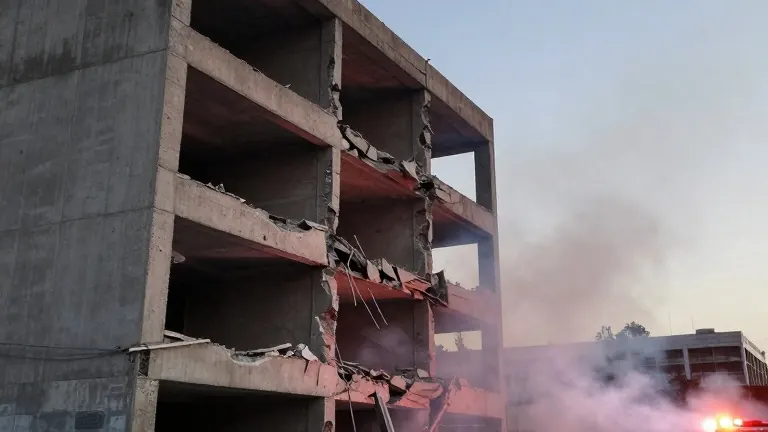
A separate airstrike killed at least seven people in Yemen's southwestern province of Taiz on Wednesday. Houthi health authorities said the strike hit a house in the district of Maqbanah. Two children were among those killed, and six other children were wounded. The Houthi-run health ministry blamed Saudi Arabia for the strike. Footage aired by Houthi media showed a heavily damaged concrete building with collapsed roof and wall sections.
The strike marks the latest deadly incident since the Yemen civil war revived more than three months ago. The conflict pits the Iranian-backed Houthis against Saudi Arabia and Yemen's internationally recognized government. In Lebanon, the Health Ministry reported that a drone strike on a motorcycle in the village of Qabrikha killed one person and wounded another. The Israeli military stated it struck two suspects who were observing its soldiers. This was the first such strike in nearly a month since a U.S.-brokered ceasefire ended the latest Israel-Hezbollah war in late June.
UN peacekeeping chief Jean-Pierre Lacroix warned that Lebanon faces a security vacuum when the UNIFIL mission ends on December 31. He noted that Lebanese officials fear leaving the two armies facing each other without a third-party presence. Lacroix questioned who would monitor the Blue Line border and prevent unintended clashes. The U.N. Security Council is scheduled to discuss the matter on November 19.