NTSB finds tail fragments four miles from Florida crash site
Recovered elevator pieces suggest the Learjet 60 broke apart before impact, complicating the investigation into the fatal nosedive.
By Ethan Cook ·
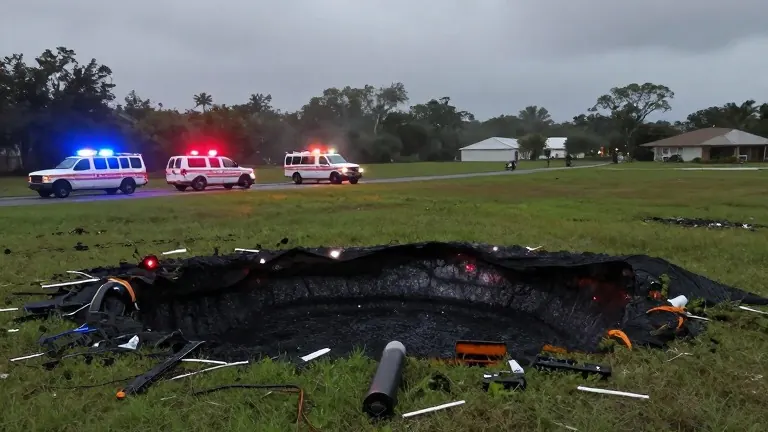
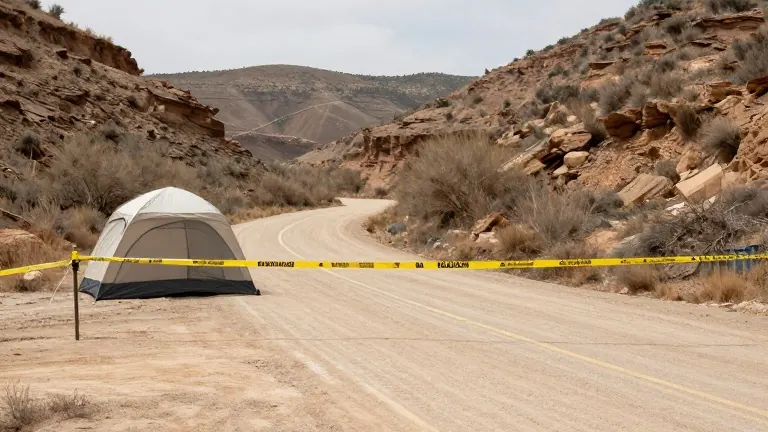
National Transportation Safety Board member Tom Chapman announced on Tuesday that investigators recovered most of the left elevator from the Learjet 60 crash in Florida. The fragments were located between 1.3 and 3.8 miles from the impact point in Greenacres, near West Palm Beach. This discovery confirms that the aircraft's tail assembly was separating from the fuselage before it struck the ground on Sunday afternoon.
Chapman stated that without an intact elevator, the pilot could not have corrected the aircraft's pitch during the descent. He described the finding as a critical piece of evidence that will guide further inquiries. The NTSB is currently prioritizing weather analysis as a primary cause. The nosedive began after the co-pilot reported ice accumulation and severe turbulence while the jet entered a developing thunderstorm cell.
Aviation safety expert Jeff Guzzetti told the Associated Press that the detached parts were likely the result of the nosedive rather than the initial cause. He noted that the proximity of the wreckage to the crash site indicates the elevator components separated at a lower altitude. If the parts had broken off at higher elevations, wind drift would have carried them much farther from the impact crater.
Former NTSB member John Goglia analyzed flight tracking data that shows the plane leveling off for approximately eight seconds at 8,000 feet. Goglia believes the captain pulled up sharply during this maneuver, overstressing the tail and tearing the horizontal stabilizer away from the fuselage. Video frames captured by witnesses appear to show the entire horizontal stabilizer missing from the top of the tail just before impact.
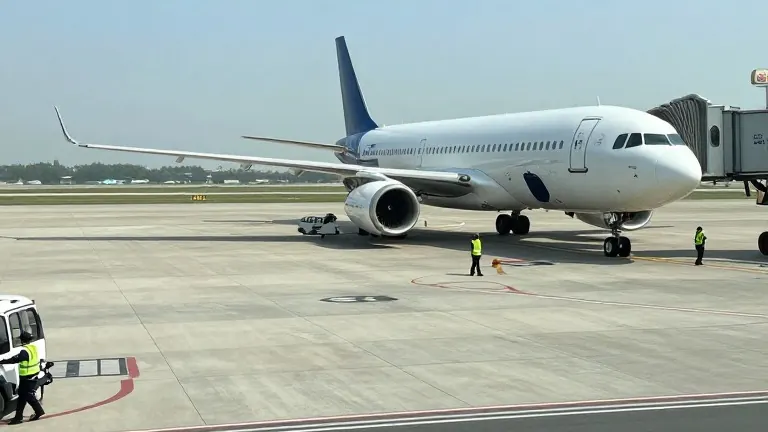
The Learjet 60 was traveling from Austin, Texas, to the Bahamas when it crashed. Nine people were aboard and all were killed. Among the victims were technology entrepreneur Adam Robinson, his wife Helen Sharp, their two young children, and the family's nanny, Ana María Ramírez Cetina. The Colombian government confirmed it is assisting her family and President Abelardo de la Espriella posted on social media that her premature departure fills them with sadness.
Ramírez Cetina's sister, Angie Alejandra Ramírez, told Blu Radio in Bogotá that she spoke to her sister minutes before the flight. She said her sister, a biomedical engineer who had moved to the United States for better work opportunities, planned to watch a video of her baby nephew upon landing. The sister described Ramírez Cetina as a devoted nanny who loved the children and the family's dog, Bonnie.
The captain, 55-year-old Jeff Gregory, lived in the Philadelphia suburbs. Friends and colleagues described him as a longtime aviator and devout Christian. A man's voice reciting the Lord's Prayer was audible in the background of the co-pilot's final radio transmissions. Thomas Noetzel, director of operations at Upper Jets, launched a fundraising campaign to support Gregory's wife and children. He wrote on the GoFundMe page that knowing Gregory had made him a better person.
Co-pilot Nathalia Gadelha Filgueiras texted her boyfriend about 10 minutes before the crash, reporting turbulence and ice. In the final two minutes, her radio communications shifted from calm updates to urgent warnings. She told air traffic control that the plane was being thrown up and down by more than 700 feet and that they were descending at over 20,000 feet per minute. Her last transmission stated, "We're out of time!"
The impact created a crater and ignited the aircraft. Approximately 600 residents in nearby homes remain displaced, though only one person on the ground was reported injured. Investigators have been collecting dashcam footage and interviewing witnesses. After days of heavy rain, the team plans to access the crater on Wednesday to retrieve critical components. A preliminary NTSB report is expected in about one month, with a probable cause determination likely taking more than a year.