St. Paul woman guides parishioners through rites of passage
Carol Arend has spent decades in St. Thomas More Parish, helping families navigate weddings and funerals while living in a restored 1894 carriage house.
By Ethan Cook ·
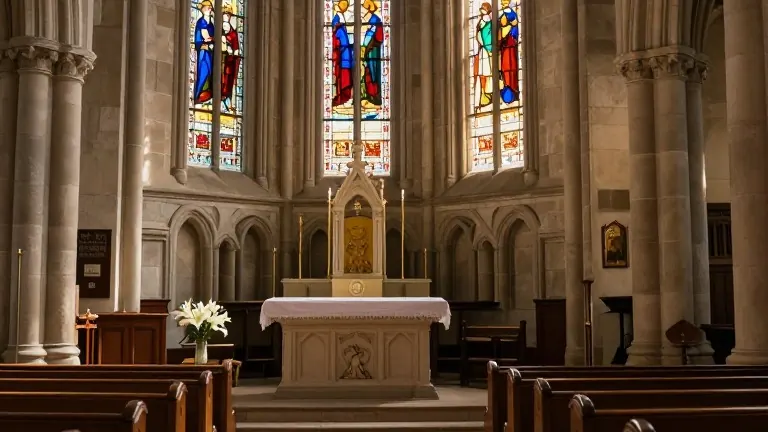
Carol Arend has lived in St. Paul her entire life. She currently resides in a carriage house in the Cathedral Hill neighborhood that was built in 1894. The structure required extensive renovation and was relocated from one end of her lot to the other. Arend, 61, raised three daughters in an adjacent 1895 home.
She works for her childhood parish, St. Thomas More on Summit Avenue. The parish was formerly known as St. Luke. Her roles include marriage preparation coordinator, pastoral care, and adult faith formation. Arend described her job as doing a little bit of a lot of things. She also leads a psalm group for the community.
Her work involves listening to families during some of their most vulnerable moments. She practices what she calls the theology of accompaniment. This approach focuses on walking alongside people rather than correcting them. She notes that people often want to be heard and have their pain acknowledged before receiving advice.
Arend often encounters individuals who have not been active in the Church for years. She says these people frequently assume the Church erects unnecessary barriers. In reality, she explains that parish staff and chancery officials look for ways to make sacraments work for the individual. The goal is to accept people where they are without turning them away from the house of God.
During funeral planning, Arend observes that family members can become anxious and try to micromanage details. They may worry about specific liturgical elements, such as the cantor's movements. She acknowledges their stress while reminding them that the staff handles these tasks daily. She finds the atmosphere during these meetings to be a thin place where the divine is palpable.
For engaged couples, Arend emphasizes that a wedding is a sacrament with a party. She encourages couples to have frank conversations about their faith and motivations. Many couples have not been close to the Church since their confirmation. She pairs them with mentor couples who are not family members to provide practical guidance. Most couples report that the Mass was the high point of their wedding day.
Arend credits Jesuit spirituality for shaping her approach. She values the practicality of Ignatian discernment. She describes the Church as generous and full of mercy, moving away from the black and white view she held earlier in life. Her go-to prayer is the Our Father, which she learned from her mother by her bedside.