Gaza winter aid stalls as elections delay peace
The Board of Peace says tens of thousands remain in exposed tents while the International Stabilization Force deployment waits for Israeli election results.
By Ethan Cook ·
More than three years after the October 7 attacks, two million residents in Gaza continue to live under Hamas rule. The militant group controls roughly 30 percent of the territory, where most civilians are concentrated. This arrangement has persisted since the conflict began, leaving the population in a state of ongoing uncertainty as winter sets in.
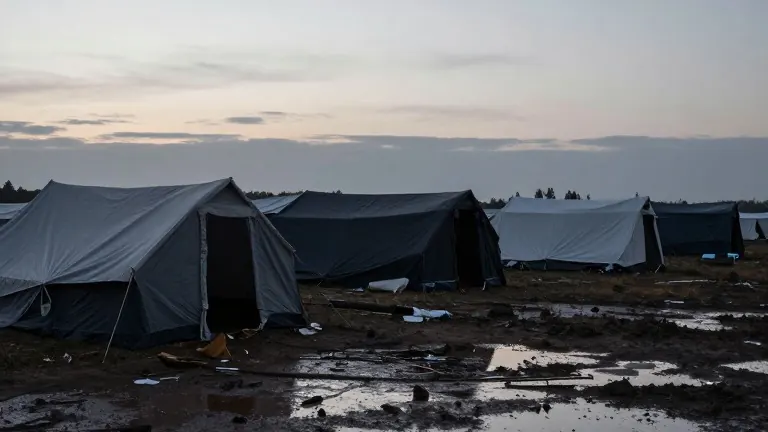
Severe flooding this season has worsened conditions for people living in temporary shelters. The Board of Peace, created under the October 2025 US-backed ceasefire, issued a statement on Monday. It noted that tens of thousands are trapped in tents facing cold and unsafe environments. The body declared that the time for promises without action has passed.
The Board of Peace stated it has helped humanitarian aid enter Gaza but warned that current efforts are insufficient. It urged the Israeli government to approve essential materials for building shelters. It also called on Hamas to disarm. The group argued that civilians can no longer afford continued inaction from political leaders.
Implementation of the peace plan has stalled due to several factors. The Iran war in February 2026 and upcoming Israeli elections have slowed progress. Although the US secured UN backing in January 2026 and opened a Civil-Military Coordination Center in Kiryat Gat, the International Stabilization Force has not deployed. Washington is reportedly waiting to see the outcome of Israeli elections before committing to further steps.
Israeli political dynamics have complicated the process. The governing coalition has hesitated to appear soft on Hamas during the election cycle. This contrasts with early post-war rhetoric that suggested a decisive dismantling of Hamas governance. The strategy has shifted to degrading the group's capabilities while allowing it to remain. Military operations have killed most mid-level and high-level Hamas commanders by the fall of 2024, but the group continues to recruit.
The Israel Defense Forces have expanded control to roughly 70 percent of Gaza since the ceasefire began. They have repeatedly reconquered areas such as Zeitoun and Jabalya, often razing homes. This cycle has forced civilians to move multiple times, concentrating them in central refugee camps and western Gaza. Disarming the estimated 10,000 Hamas fighters hiding among civilians remains a difficult task for the IDF.
Observers note that the Board of Peace needs to give its activities more substance to break the cycle of stagnation. This may involve deploying the International Stabilization Force and starting reconstruction projects. Until nations and Israeli leaders make these commitments, residents remain in a difficult winter with little prospect of immediate change.