Rubio insists U.S. foreign policy holds steady after Republican midterm losses
The Secretary of State told G7 allies in Paris that President Trump will continue to lead diplomatic efforts on Iran and Ukraine regardless of Congress's new Democratic leadership.
By Andrew Bennett ·
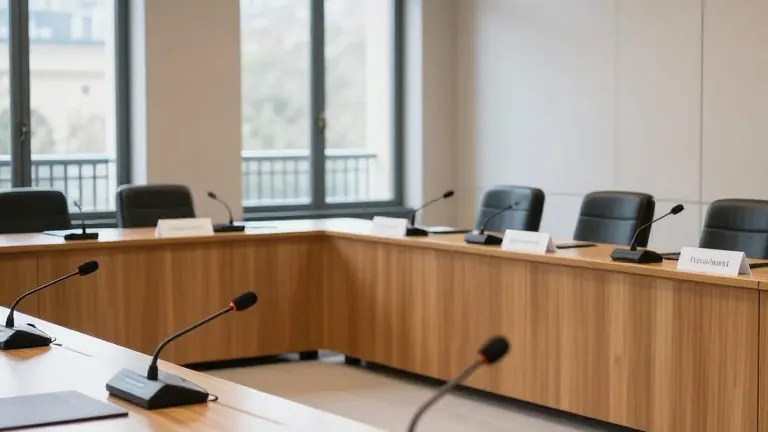
U.S. Secretary of State Marco Rubio stated that the Republican Party's midterm election losses will not alter the Trump administration's foreign policy. Speaking in Paris on Monday, Rubio emphasized that the president remains the primary decision-maker on global issues. He said the administration will maintain an "America First" stance while continuing to pursue diplomatic solutions to conflicts in Iran and Ukraine.
The gathering marks Rubio's first overseas trip since Democrats took control of Congress in the recent elections. Allies had raised questions about whether the administration would shift its positions following the change in leadership. Rubio addressed these concerns by clarifying that while Congress plays a role in funding and oversight, the president determines the direction of policy.
Talks between the U.S. and six other G7 nations began with visible disagreements on several fronts. The group includes the U.K., Canada, France, Germany, Italy, and Japan. While all sides agreed on the need to end ongoing wars quickly, they differed on the methods and institutions involved in those efforts.
The administration continues to oppose the International Criminal Court, a position that sets it apart from its G7 partners. Rubio said the U.S. will not back down from its stance against the court. He argued that American military personnel should not stand trial in an institution that the United States does not officially join.
On the Russia-Ukraine conflict, Rubio said talks involving U.S. envoys Steve Witkoff and Jared Kushner are scheduled to begin Tuesday in Abu Dhabi. He declined to predict the outcome but affirmed the U.S. intent to keep mediating. On artificial intelligence, Rubio said the U.S. opposes regulatory efforts by some allies that he believes could stifle innovation.
Canadian Foreign Minister Anita Anand noted that the change in congressional leadership creates uncertainty for Washington's approach. European Union foreign policy chief Kaja Kallas said Europe is prepared to work with the new Congress to focus on shared issues. German Foreign Minister Johann Wadephul stated that Europe must be included in any resolution to the Ukraine war.
Rubio also addressed the Iran conflict, noting that diplomatic efforts have not yet been productive due to what he called unrealistic Iranian demands. He said he expects allies to ask questions about the war, which has impacted fuel prices through instability in the Strait of Hormuz and the Red Sea.