Trump's Rally Tour Clashes With Low Approval Ahead of Midterms
The president urges supporters to treat his name as if it were on the ballot while candidates navigate a contentious campaign marked by distance and fraud concerns.
By Rosa Wojcik ·
President Donald Trump ended a series of dozens of rallies on Sunday in Salina, Kansas, where he urged supporters to act as though his name appeared on the ballot for the midterm election. The Associated Press reports that this strategy highlights his central role in the campaign, even though he is not up for re-election. His schedule included stops in Mississippi, South Carolina, and Texas, signaling a heavy focus on states where the balance of power in Congress is at stake. The president’s direct appeal to voters contrasts with the more measured approach of many candidates who are seeking to define their own identities in the race.
Many Republican candidates have kept a visible distance from the president during this final stretch of the campaign. This strategic retreat is evident in races across the country where party leaders are attempting to differentiate their platforms from the administration’s policies. The Associated Press notes that this distance is a calculated move to appeal to moderate voters who may be skeptical of the president’s recent actions. By maintaining this separation, these candidates hope to secure their seats while acknowledging the significant influence Trump still wields over the party’s base.
The mood among voters is shaped by economic concerns and a broader assessment of the administration’s performance. AP-NORC polling indicates that 35 percent of U.S. adults approve of Trump’s job performance, while only 25 percent approve of his handling of the economy. Approximately seven in ten Americans believe the country is heading in the wrong direction, with most blaming the president for high prices. These figures provide context for the intense competition in the 46 battleground House districts and 13 competitive Senate races identified by Ballotpedia.
Trump has continued to voice concerns about voting integrity, making claims about noncitizen participation that critics have labeled false. His administration has filed lawsuits in states such as Alaska and California, leading to legal battles that have occupied the courts in the days before the vote. On Monday, a federal judge temporarily barred the administration from implementing a plan to prevent noncitizen voting, a move that critics said risks disenfranchising eligible voters. These legal actions have added a layer of tension to the election day proceedings.
The financial scale of the 2026 elections is likely to be the largest in history, with Republican committees outspending their Democratic counterparts. This spending advantage was bolstered by contributions from Trump-affiliated groups and prominent donors like Elon Musk. However, at the individual candidate level, Democrats have managed to outraise their opponents in many races. The Associated Press analysis of AdImpact data shows that 88.1 percent of Republican general election television ad spending went to states and districts where Trump won in 2024. This heavy investment in safe Republican territory reflects a strategy focused on maximizing turnout in areas where the party already holds a strong base.
Democrats have described their outlook as cautiously optimistic, pointing to the anger among voters over the cost of living and an unpopular war with Iran. DCCC Chair Rep. Suzan DelBene stated that the American people are angry and want change. In contrast, RNC Chairman Joe Gruters emphasized the importance of turnout, noting that if Republicans turn out their voters, they will win. These differing assessments highlight the tight margins that will determine control of both chambers of Congress in the president’s final two years in office.
The election determines who will control Congress for the remainder of Trump’s second term, with all 435 House seats and 35 Senate seats up for grabs. Republicans currently hold a majority in both chambers, but Democrats need a net gain of three House seats and four Senate seats to take control. The outcome of this election will shape the legislative agenda for the next two years, including potential investigations and oversight activities if Democrats gain power. The new congressional maps in six states add another variable to the equation, as these districts may not vote in the ways they were drawn.
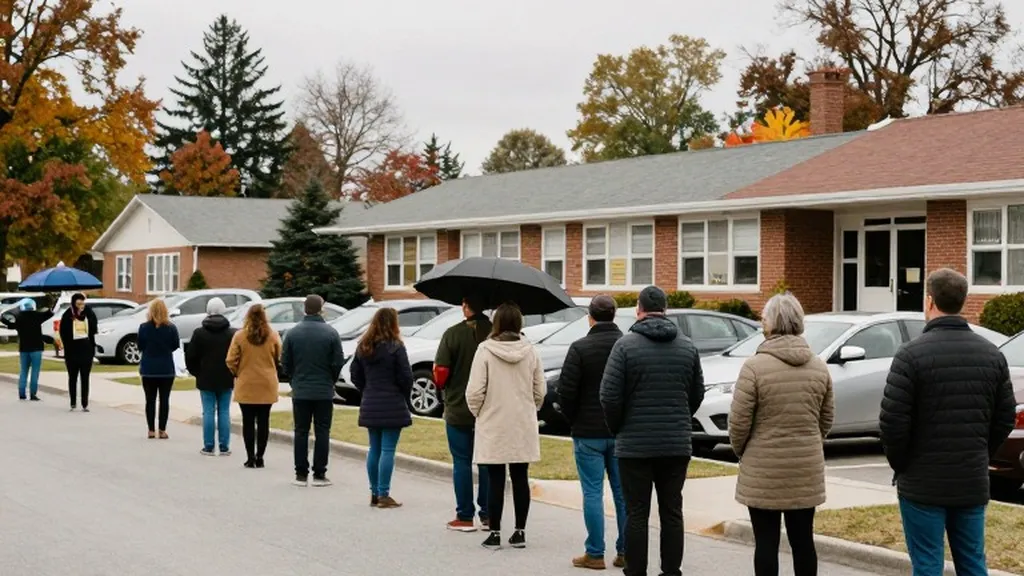
Voters across the country are heading to the polls on Tuesday, with more than 57 million people having already cast their ballots in the days leading up to the election. The U.S. Postal Service has added staff and hours to ensure that mail-in ballots are counted on time, addressing concerns about delays in states that rely heavily on mail voting. As polls open, the focus shifts to the ground game in key districts where small margins could decide the fate of the presidency’s remaining legislative power.
The legal landscape surrounding the election has been active, with judges in multiple states issuing orders that affect how votes are counted and processed. In California, a judge ordered the administration to stop demanding that election officials segregate ballots cast by people on lists of suspected noncitizens. These judicial interventions have created a sense of urgency for election workers and officials who are tasked with managing the count under tight deadlines. The interplay between the executive branch and the judiciary remains a central theme in the coverage of this election day.
As the day progresses, the attention of both parties turns to the battleground states where the outcome is most uncertain. In the Senate, races in states like Maine, Iowa, and Georgia are being watched closely, with ratings ranging from toss-up to lean Democratic. The governor’s races in states such as Georgia and Nevada also carry significant weight, as Democrats hope to hold a majority of governorships for the first time in two decades. The results of these races will provide a clearer picture of the national political mood and the direction of the party in power.